
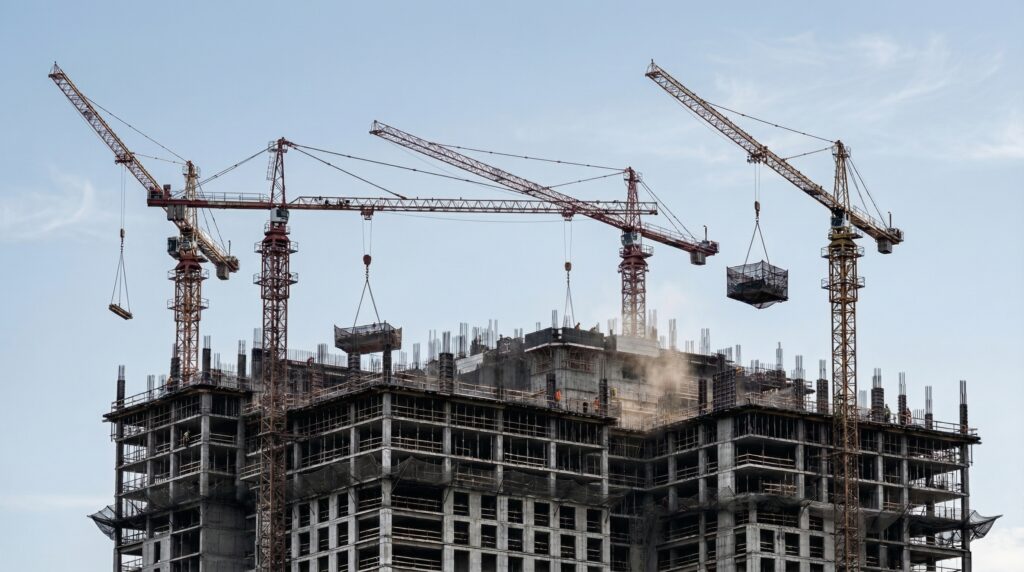
Tower crane safety in the UAE is not optional — it is a legal obligation enforced by multiple authorities. Understanding the full framework before your crane goes up could be the difference between a smooth project and a regulatory shutdown.
The UAE construction industry is one of the most active in the world, with cranes visible across virtually every city skyline from Dubai to Abu Dhabi. Yet with this growth comes a critical responsibility — ensuring that every tower crane erected on a UAE construction site meets the stringent safety standards required by law and international best practice.
Whether you are a project manager, site engineer, or contractor, understanding the UAE's crane safety regulatory framework is essential before your next project begins. In this guide, we break down everything you need to know.
Tower crane safety in the UAE is governed by a combination of federal regulations, emirate-level authorities, and international standards. The key regulatory bodies you need to know are:
Key Point: In the UAE, you cannot legally erect a tower crane without a valid permit from the relevant municipal authority. Attempting to operate without one can result in immediate project suspension and significant fines.
Beyond local regulations, the UAE construction industry recognises and requires compliance with key international crane safety standards. The most commonly referenced are:
All HUBA crane models supplied through HUBA Middle East are manufactured to meet EN 14439 and relevant international standards, providing UAE contractors with the documentation needed for municipal approvals.
Before any tower crane is erected on a UAE site, the following must be in place:
One of the most commonly overlooked aspects of crane safety compliance in the UAE is operator qualification. Simply having an experienced crane operator is not sufficient — they must hold the correct certifications recognised by UAE authorities.
Required qualifications typically include a valid crane operator licence from an accredited training body, a medical fitness certificate, and documented hours of operation on the specific crane type being used. Some municipal authorities also require operators to pass a practical assessment on the specific crane model.
Safety compliance does not end at erection. UAE regulations require ongoing periodic inspections throughout the crane's operational life on site. These typically include:
HUBA Middle East Tip: Always keep a physical inspection log on site for every crane. Municipal inspectors can and do request these records. A missing or incomplete log is treated as a compliance failure regardless of the crane's actual condition.
Based on industry experience across UAE construction projects, the most frequently cited crane safety violations include operating beyond rated load capacity, inadequate exclusion zones around crane operations, failure to stop operations in high wind conditions, operating cranes at night without adequate lighting, and missing or expired operator licences. Each of these carries significant consequences — from fines and project delays to, in serious cases, criminal liability.
At HUBA Middle East, safety compliance is built into every crane we supply. All our tower cranes come with full documentation packages including CE certification, load charts, erection manuals, and manufacturer declarations — everything your site team needs for permit applications and inspections.
Our technical team also supports clients through the permit application process, providing the manufacturer's documentation and technical specifications required by Dubai Municipality and other UAE authorities. When you work with HUBA Middle East, you are not just getting a crane — you are getting a partner who helps you stay compliant throughout your project.
All HUBA crane models come with full UAE compliance documentation. Talk to our team today.
Get In Touch