
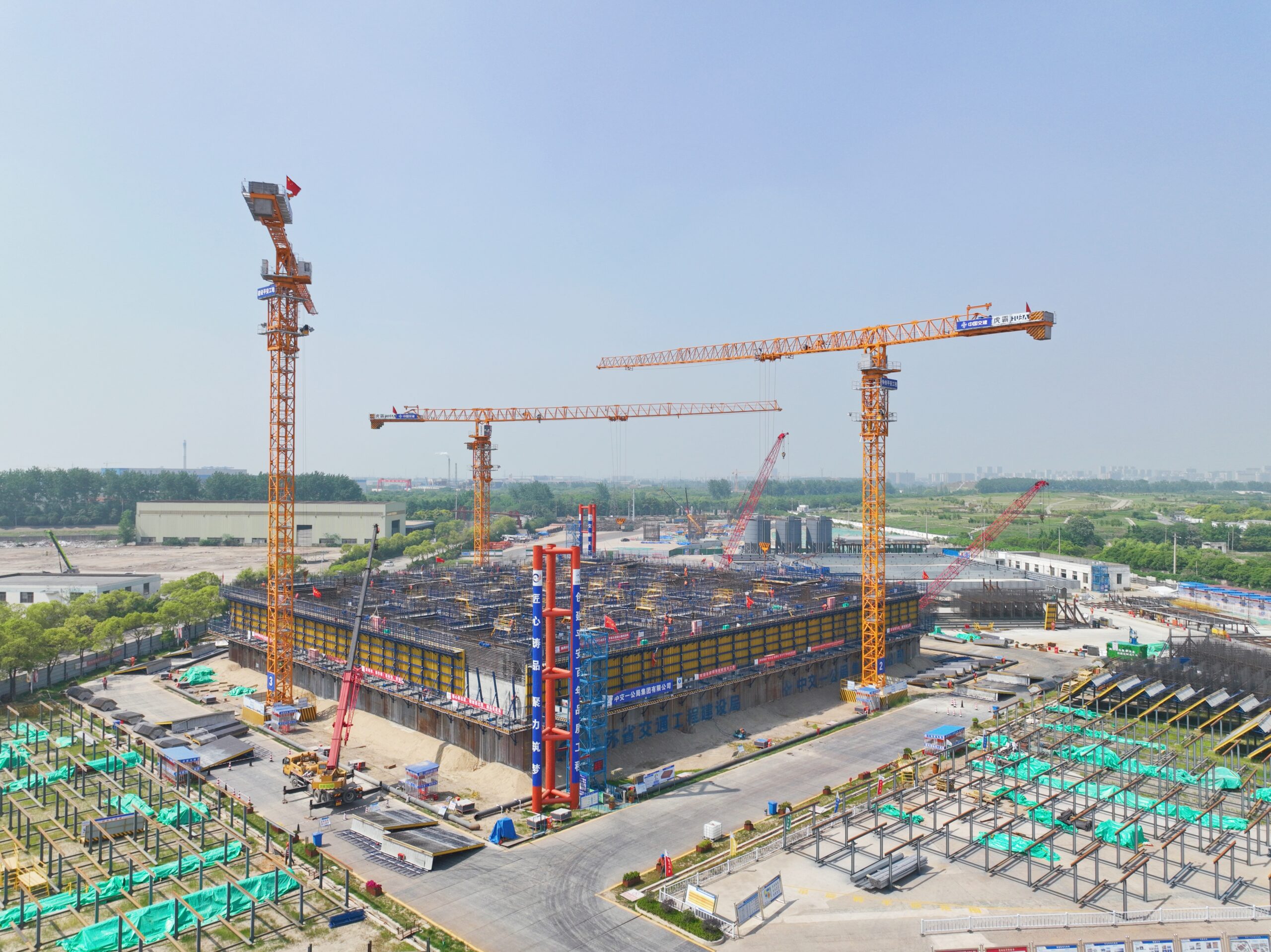
Flat top and luffing tower cranes both have their place on UAE construction sites — but choosing the wrong type for your site conditions can create costly operational problems that are difficult to fix once the crane is up. Here's how to decide which is right for your project.
One of the most common questions the HUBA Middle East technical team receives from UAE contractors is which crane type to choose — flat top or luffing. Both are tower cranes, both can handle the loads typical of UAE high-rise construction, and both are available in the HUBA range. But they are optimised for very different site conditions and operational scenarios.
Understanding the fundamental engineering difference between the two types is the starting point for making the right selection.
A flat top tower crane has a horizontal jib with no head tower above the slewing ring. The jib and counterjib are connected directly to the slewing ring at the top of the mast, creating a clean, flat profile at the top of the crane. The load trolley travels along the underside of the horizontal jib.
A luffing tower crane has an inclined boom — the main jib can be angled upward at varying degrees, reducing the horizontal footprint of the crane during operation. The load is handled at the tip of the inclined boom, and the working radius changes as the boom luffing angle changes.
The flat top crane is the right choice for the majority of UAE construction projects. If your site has adequate airspace, no overswing restrictions, and you are running multiple cranes at the same height, the flat top configuration offers the best combination of capacity, cost, and operational simplicity.
Flat top cranes are particularly well suited to:
The luffing crane becomes the correct choice when site constraints make a flat top configuration impractical. The defining scenarios where luffing is the right answer are:
Dubai-Specific Note: In densely developed areas such as Business Bay, DIFC, and parts of Jumeirah, luffing cranes are increasingly specified by project consultants as a condition of permit approval. Always check with your project consultant before assuming a flat top crane will be approved for your site.
Use these four questions to guide your crane type selection:
For most UAE projects on open or semi-open sites — flat top. For tight urban sites in established areas of Dubai or where airspace restrictions apply — luffing. When in doubt, share your site plan with the HUBA Middle East technical team and we will give you a clear recommendation based on your specific conditions.
Share your site plan with our technical team and we will give you a clear, no-obligation recommendation.
Talk to Our Team